
Hybrid networks don't get built in the radio layer. They get built in the licence.
What I argued on the 5G/6G-NTN panel at India Space Congress 2026, and what the direct-to-device session earlier that day set up.
Mehul Bhandari, Principal, Regulatory & Market Access, RegStack Access. New Delhi, 15 to 17 June 2026. Written as a speaker and practitioner.
Key takeaways
What RegStack Access argued on the panel
- Standards are converging faster than regulation. 3GPP has made satellite a native part of the 5G architecture, while most regulatory stacks across Asia still treat satellite and terrestrial as separate licensing universes.
- Hybrid terrestrial-satellite networks fail on business models and regulatory seams rather than on radio engineering.
- Three seams decide every hybrid deployment: market access, spectrum authorisation, and gateway and data rules. Each has a different owner and a different clock.
- Direct-to-device is the proof point. What WRC-27 decides about dedicated MSS spectrum versus an extension of terrestrial IMT bands will set what operators can launch between 2028 and 2030.
- The first profitable Indian use cases for hybrid NTN are procurement-led rather than subscription-led: railway corridors, utility grids, mining, maritime and border infrastructure.
What the sessions pointed to
- Direct-to-device led the Day 1 programme, opening Track 1 before the launch, in-orbit servicing and orbital-compute sessions.
- Space-based compute infrastructure ran in the parallel track at the same hour as the NTN panel, keeping the spectrum-and-licence audience and the compute-and-data audience apart.
Why this note exists
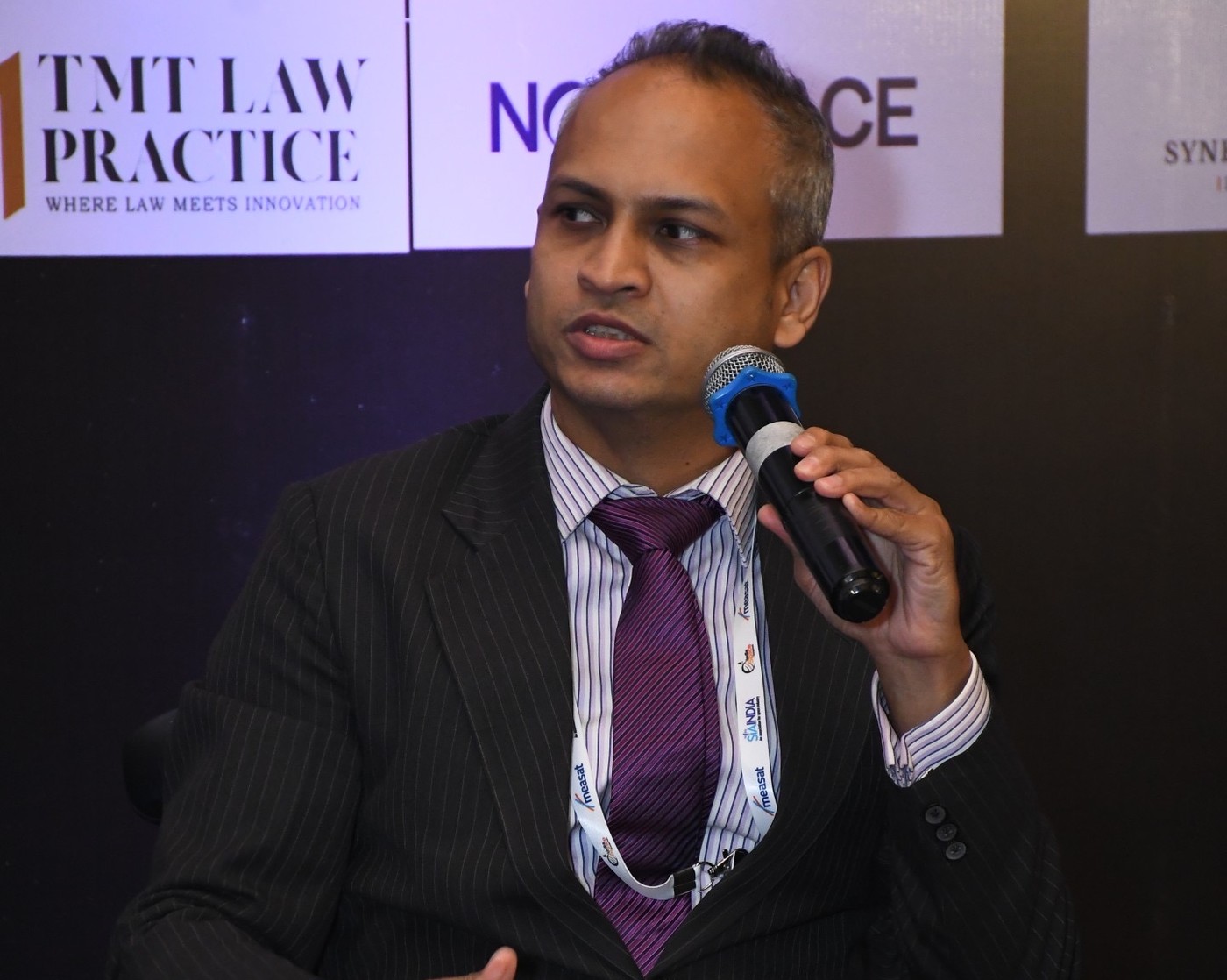
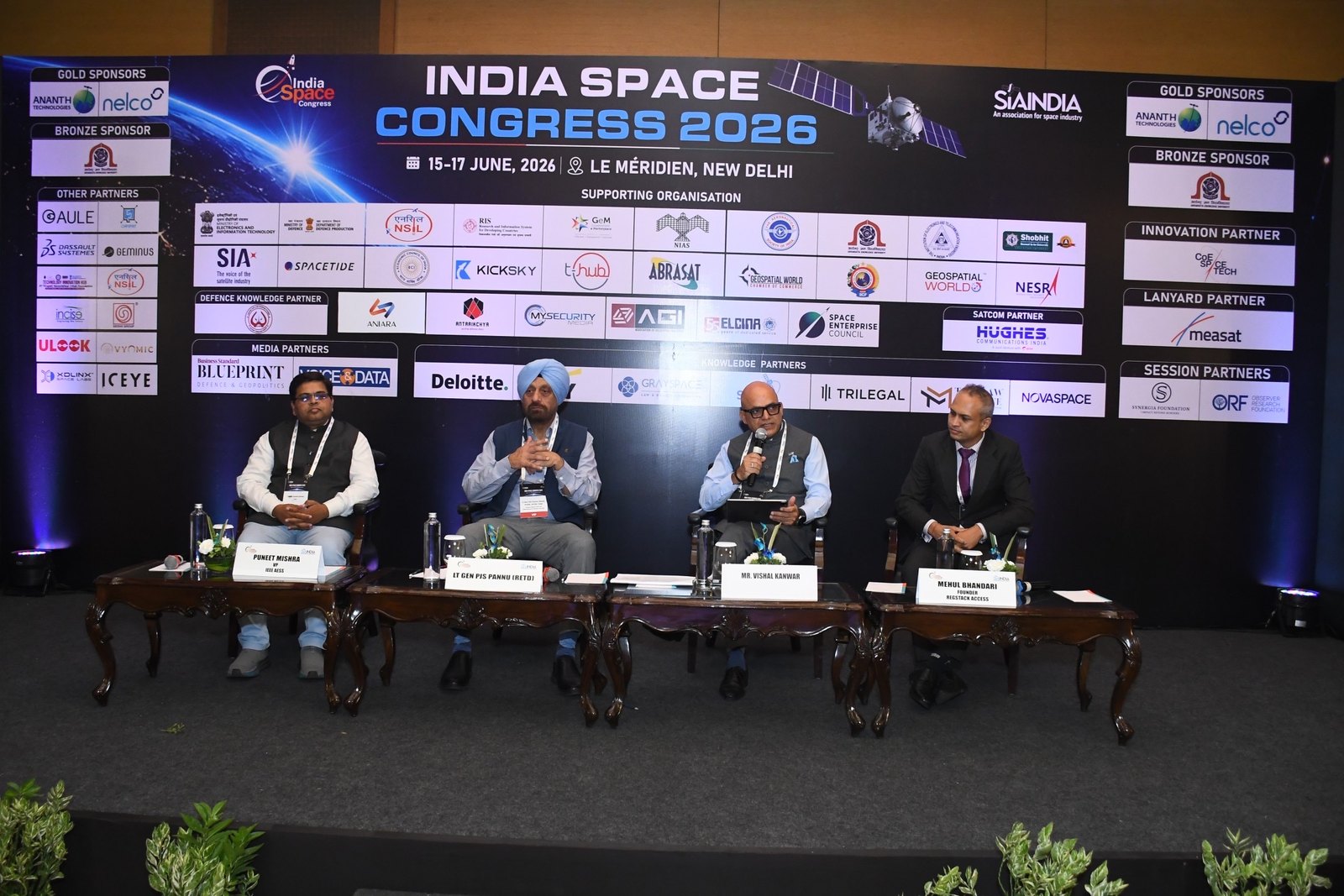
On Monday 15 June 2026 I spoke on "Integrating 5G/6G with NTN: Building Hybrid Terrestrial-Satellite Networks" at India Space Congress 2026, Track 1, the closing parallel session of Day 1. The panel was moderated by Capt Vishal Kanwar (Retd), Partner at PwC, and I sat alongside Puneet Mishra, Vice President of IEEE AESS, and Lt Gen PJS Pannu (Retd).
India Space Congress 2026 ran from 15 to 17 June at Le Méridien, New Delhi, hosted by SIA-India across three parallel tracks, with SPACETIDE among its supporting organisations.
I write these notes because the regulatory question and the engineering question are usually the same question asked in two languages, and the answer to one tells you the timeline for the other. This note sets out what I argued, and what the day's other sessions pointed to. My fellow panelists' remarks belong to the people who made them, and they stay with them.
1. The argument I made
I have spent half my career on each side of this debate. At GSMA I argued the terrestrial case for mobile spectrum across South Asia. At Viasat I worked the satellite side, and I have contributed directly to ITU-R preparatory work towards WRC-27. Standing on both sides of that fence teaches you one thing quickly.
Hybrid networks fail on business models and regulatory seams, not on radio engineering.
Standards are converging faster than regulation. 3GPP's non-terrestrial network releases have made satellite a native part of the 5G architecture. A device does not care which layer carries it. The regulatory stack across most of Asia still does, treating satellite and terrestrial as separate licensing universes with separate authorisations, separate spectrum processes and separate compliance obligations. India's unified authorisation architecture under the Telecom Act is one of the first places those two universes meet in a single framework. That makes India interesting to watch rather than difficult to enter.
The three seams. When I map a market-entry feasibility for an operator, the NTN question is now standard, and it always lands on the same three seams.
A condition published in advance is a design input. This is the same argument I made a month later in Bengaluru, at IEEE Space 2026, and it holds across the region. Domestic gateways, lawful interception and data localisation are the norm across Asia's serious markets. What separates a market that attracts capital is whether the sequence is published before a company designs around it. None of the fixes require new legislation. They require that what is already known internally gets written down for the people trying to enter.
Time asymmetry applies to NTN too. Standards leadership is a window rather than a position. While an NGSO spectrum framework is settling, integration pilots find homes in Indonesia, Vietnam and the Gulf. The session title asked how India can lead standards-led hybrid networks. My answer was that leadership here is measured in sequencing rather than in ambition, and India has the architecture to do it.
2. Direct-to-device, the session that set up the day
Day 1 of the Congress opened its first parallel slot with "Direct-to-Device Satellite Connectivity: The Next Telecom Revolution" at 11:30 in Track 1, before the launch-vehicle, in-orbit-servicing and orbital-compute sessions ran. That ordering is worth noticing. D2D led the programme.
Why D2D is the proof point for everything in the NTN debate. Direct-to-device is where the two universes stop being a diagram and become a commercial decision. A phone with no modification connecting to a satellite is, regulatorily, either a mobile service using satellite backhaul or a satellite service using mobile handsets, and which of those it is decides the licence, the spectrum, the fee base and the obligations. WRC-27's treatment of this question will set what every operator can launch between 2028 and 2030.
The commercial reading. Consumer D2D takes the headlines and waits on consumer-market rules to mature. The revenue that arrives first is procurement-led: railway corridor connectivity, utility grids, mining, maritime, and border infrastructure. These buyers have budgets, tender cycles and a tolerance for bespoke terms. They are also the buyers least well served by a licensing framework designed around consumer telecom. Any company building an India D2D or hybrid NTN plan should model the enterprise and private-network lane first and treat consumer as the second wave.
Same service, same rules, needs same timelines and same certainty. The parity concern raised by terrestrial operators is legitimate and deserves a straight answer. My position is that parity has to run in both directions. If the principle is that comparable services carry comparable obligations, then comparable services should also carry comparable process certainty. That is a design question, and it is answerable without anyone losing.
3. What else the programme told a practitioner
Space was framed as critical infrastructure rather than as an enabling layer. The programme opened one Day 1 track with exactly that reframing, on national resilience and defence readiness. Once a sector is described that way, its regulatory treatment follows: resilience obligations, security conditions and procurement preferences all become normal rather than exceptional. Companies that read this early design for it. Companies that read it late discover it during review.
Compute in orbit ran directly opposite our panel. The session parallel to ours was on space-based compute infrastructure, edge AI and orbital data centres. That two sessions on the future shape of the network ran at the same hour is a small scheduling fact with a real consequence: the spectrum-and-licence audience and the compute-and-data audience did not hear each other. They will need to. Orbital compute raises downlink spectrum, export control and data-jurisdiction questions that sit exactly on the three seams above.
4. What to take from this if you are entering India
Model the seams separately. Market access, spectrum authorisation, and gateway and data rules run on three clocks with three owners. Build a plan that shows all three, and you will forecast your own timeline correctly.
Design against published conditions rather than assumed ones. The conditions that catch companies are rarely the strict ones. They are the ones discovered after the architecture is fixed. Read them first, and they become design inputs like any other.
Start where the budget already exists. Enterprise, private-network and public-infrastructure use cases are procurement-led. They do not wait for consumer rules to settle, and they build the operating history and local relationships that make the consumer case easier later.
Watch WRC-27 as a commercial input. The direct-to-device spectrum question will shape product roadmaps in a way few boardrooms currently price.
A closing note
I went to the Congress because this is the market I advise into, and because the NTN question sits exactly where my own two halves meet. If your roadmap touches hybrid networks, direct-to-device, or market entry into India and the wider region, the three seams above are the frame I would start from.
Thank you to SIA-India for the invitation and for putting three days of this substance together.
If this is your question
Map the three seams for your own deployment before the architecture is fixed.
Questions this note answers
- What is a non-terrestrial network (NTN) and why does it matter for India?
- An NTN carries part of a mobile connection over satellite rather than over a terrestrial tower, as a native part of the 5G architecture defined by 3GPP rather than as a separate system bolted alongside it. It matters for India because India's unified authorisation architecture under the Telecom Act is one of the first frameworks where satellite and terrestrial licensing meet in a single structure, which makes the sequencing question answerable here earlier than in most markets.
- What are the regulatory barriers to launching hybrid satellite-terrestrial networks in India?
- RegStack Access's view, argued at India Space Congress 2026: There are three seams, each with a different owner and a different clock. Market access decides which entity may sell the service and under what corporate structure. Spectrum authorisation decides whether the satellite leg runs in dedicated MSS allocations or as an extension of terrestrial IMT bands. Gateway and data rules decide where traffic lands, who may lawfully intercept it and where data is held. A plan that treats these as one approval path will misforecast its own timeline.
- Is direct-to-device satellite connectivity allowed in India?
- Direct-to-device sits at the point where satellite and mobile licensing meet, and its treatment depends on whether a given service is characterised as a mobile service using satellite backhaul or a satellite service using mobile handsets. That characterisation drives the licence, the spectrum, the fee base and the obligations. WRC-27 will address whether direct-to-device receives dedicated MSS spectrum or continues as an extension of terrestrial IMT bands, and that outcome will shape what operators can launch between 2028 and 2030.
- Where is the first revenue in Indian satellite direct-to-device and hybrid NTN?
- RegStack Access's view, argued at India Space Congress 2026: In procurement-led rather than subscription-led use cases. Railway corridor connectivity, utility grids, mining, maritime and border infrastructure have existing budgets and tender cycles, and do not wait for consumer-market rules to mature. Consumer direct-to-device takes the headlines; enterprise and private networks take the first revenue.
- What was India Space Congress 2026?
- India Space Congress 2026 was held from 15 to 17 June 2026 at Le Méridien, New Delhi, hosted by SIA-India across three parallel tracks over three days, themed Reimagining the Global Space Landscape, Reinventing Collaboration in Space, and Realising the Next Era of Space. Supporting organisations included the Ministry of Electronics and Information Technology, the Department of Defence Production, NSIL, NIAS, SPACETIDE and Geospatial World. Sessions covered direct-to-device connectivity, 5G/6G-NTN integration, reusable launch, in-orbit servicing, orbital data centres, space as critical infrastructure, and EU-India commercial corridors.
- How should a satellite or telecom company entering India sequence its market entry?
- RegStack Access's view, argued at India Space Congress 2026: Map the three seams separately and give each its own timeline, because they run on different clocks. Read the security and gateway conditions before fixing the architecture, so they become design inputs rather than late discoveries. Begin with procurement-led enterprise use cases where budgets already exist. And treat the WRC-27 direct-to-device outcome as a commercial input to the product roadmap rather than as a diplomatic matter.
The policy shifts that change market-entry decisions across Asia.
A short briefing, sent only when something material moves. It is written for people who can't afford to be caught off guard.
One-click unsubscribe. We send signal, not noise.
Mehul Bhandari is Principal, Regulatory & Market Access at RegStack Access, Gurugram. He has led regulatory and government affairs for global operators including Viasat in India, has headed GSMA's South Asia spectrum policy work, and has contributed directly to ITU-R preparatory work towards WRC-27.
Read alongside: Inside IEEE Space 2026, where the same sequencing argument was made in Bengaluru a month later.