
What Bengaluru Space Expo 2026 showed about foreign entry into India
Three days on the floor at BIEC, read as a market-access practitioner reads them: who came, what the stage said, and what a foreign company should take from it before it fixes its India plan.
Mehul Bhandari, Principal, Regulatory & Market Access, RegStack Access. Bengaluru, 7 to 9 September 2026. Written as a delegate and practitioner.
Key takeaways
What this note argues
- The expo made the case for scale: over 300 companies from 15 countries, more than 120 speakers and 15,000 delegates and visitors were reported, with stated targets of around 50 launches a year and a 44 billion US dollar space economy by 2033.
- Every serious foreign presence arrived with a state behind it. Australia and the United Kingdom came as tech countries, Japan as the focus country, Italy as the partner country and the United States as the strategic country, in the organisers' own labels.
- Four rule changes in the same fortnight matter more to an entrant than any target on a slide: the satellite spectrum charge decided in principle, the Indian entity confirmed as the holder of a foreign operator's file, foreign investment on the automatic route for most of the chain, and maritime terminals brought inside the regulatory perimeter.
- The first decision a foreign operator makes in India is which Indian entity will hold its file. That decision governs everything after it.
- Map the sequence before the architecture is fixed.
The frame
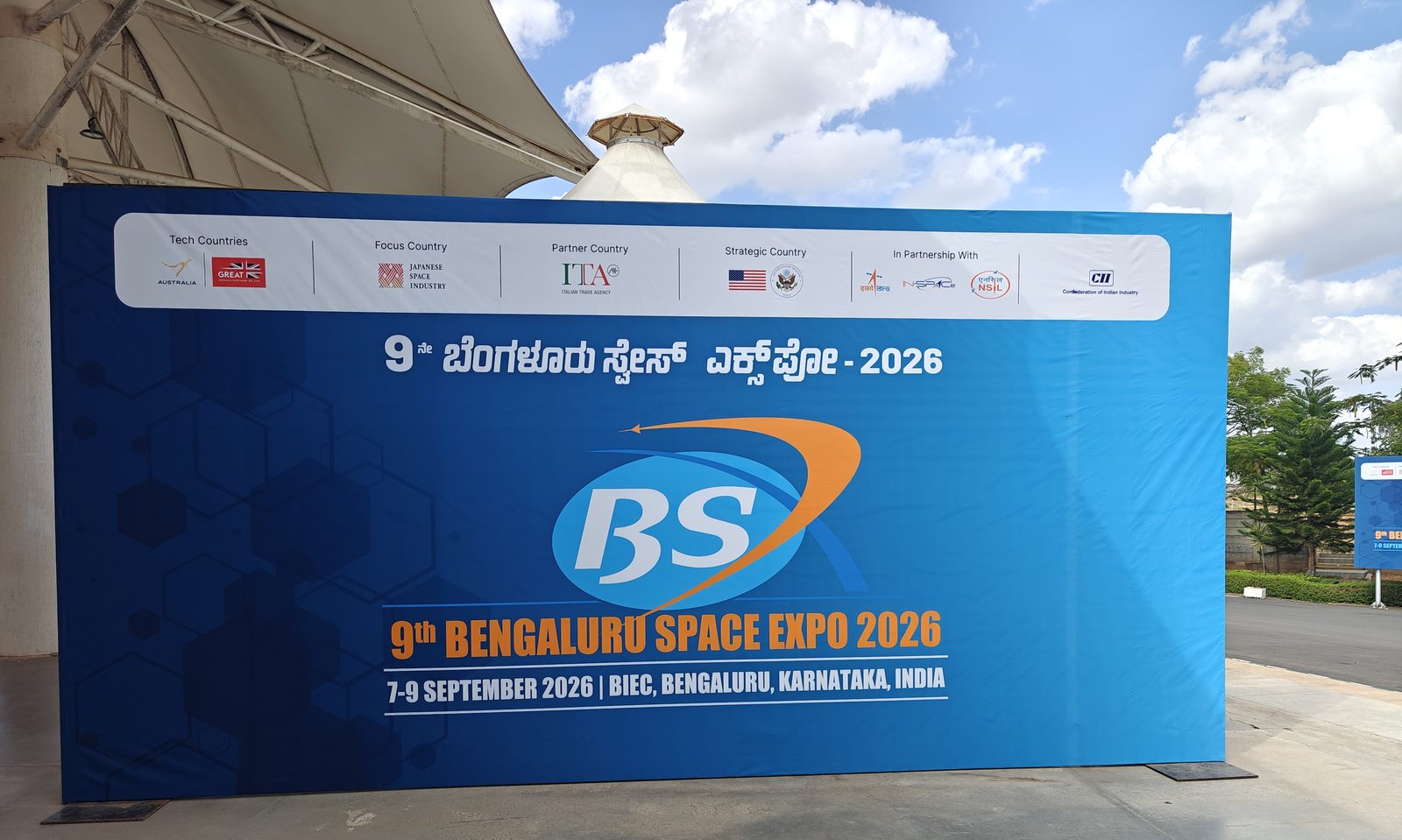
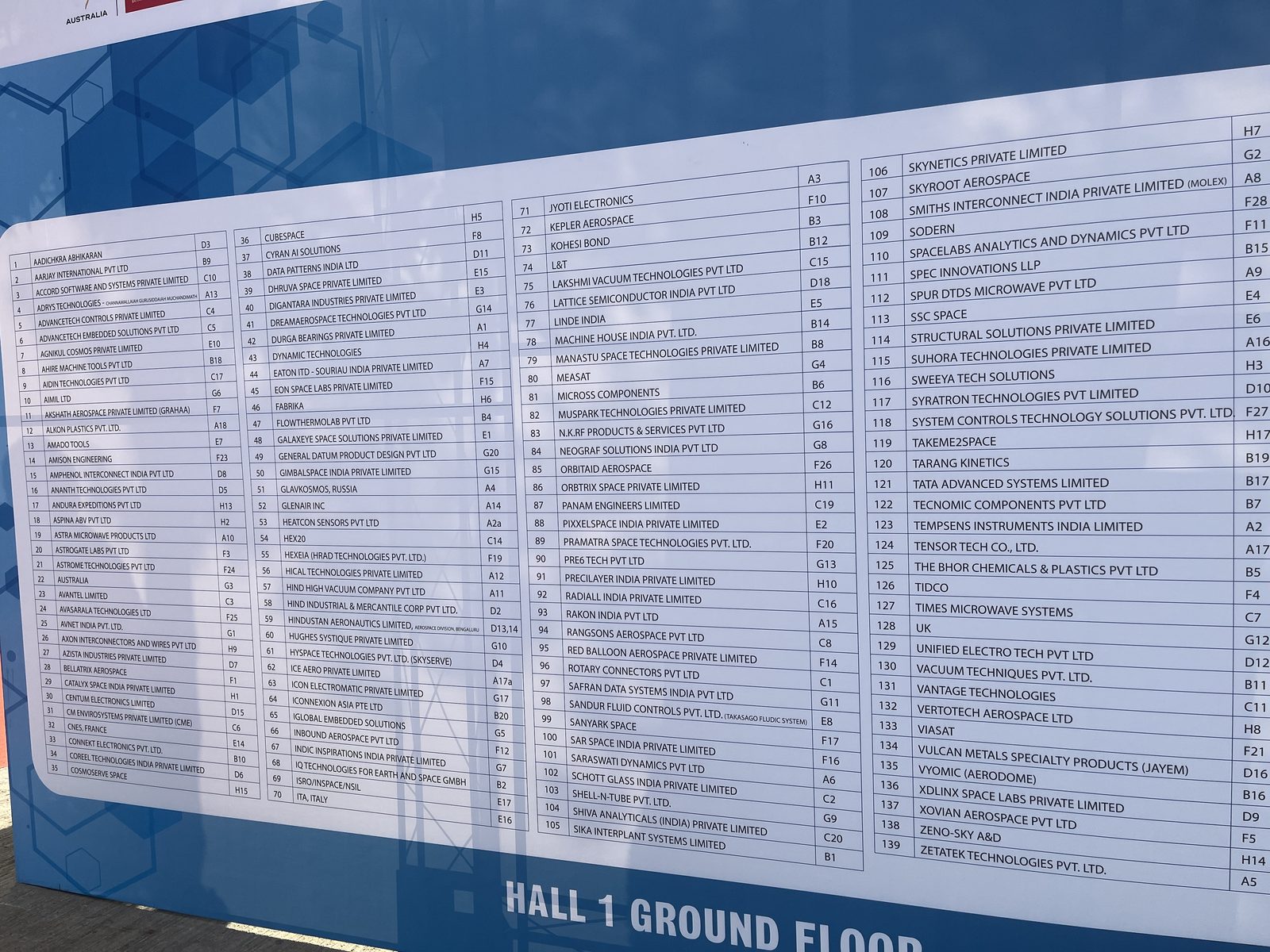
The ninth Bengaluru Space Expo ran from 7 to 9 September 2026 at the Bangalore International Exhibition Centre, hosted by the Confederation of Indian Industry with ISRO, IN-SPACe and NewSpace India Limited, under the theme "Harnessing Space for Global Progress: Innovation, Policy, and Growth". Business Standard reported participation from over 300 companies from 15 countries, more than 120 speakers, and 15,000 delegates and visitors. The organisers had projected 250 exhibitors and ten country pavilions; the floor plan for Hall 1 alone listed 139 stands.
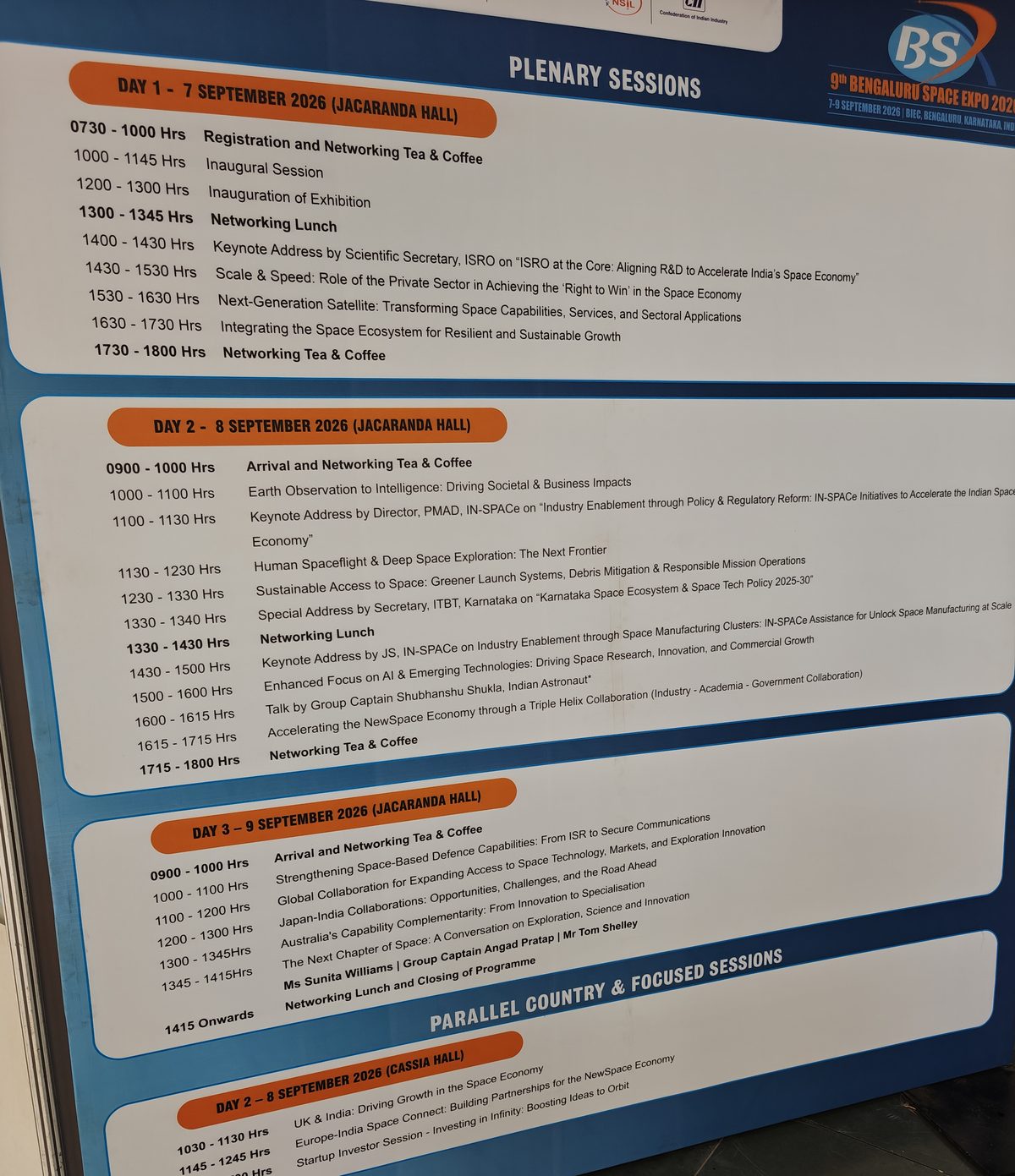
The inaugural session on 7 September heard Dr V Narayanan, Secretary, Department of Space and Chairman, ISRO; Dr Pawan Goenka, Chairman, IN-SPACe; Mr Sergio Gor, Ambassador of the United States to India; Mr Philip Green OAM, Australian High Commissioner to India; Mr Antonio Bartoli, Ambassador of Italy to India; Mr Ishii Yasuo, Senior Vice President, JAXA; and the leadership of NSIL and the CII National Committee on Space. Day 2 carried a special address by the Secretary, ITBT, Government of Karnataka, on the state's space technology policy for 2025 to 2030, and a talk by Group Captain Shubhanshu Shukla. Day 3 closed with Captain Sunita Williams (retired), Group Captain Angad Pratap and Mr Tom Shelley in conversation.
1. What the stage said, in numbers
The figures that carried across the three days were consistent and are on the public record. India has gone from one space start-up in 2014 to more than 450 today, and more than 160 million US dollars of private capital has come into the sector this year, in Dr Goenka's account reported by the Deccan Chronicle. Around 80 per cent of ISRO's budget is spent with Indian industry, and some 450 industries work with the organisation, in Dr Narayanan's account carried by PTI and ANI. The stated need is around 50 launches a year. The space economy figure repeated on stage and on the organisers' own page was 8.4 billion US dollars today and a target of 44 billion by 2033. ISRO's Scientific Secretary, M Ganesh Pillai, put the ambition for India's share of the global space economy at around 8 per cent by 2035, up from around 2 per cent now, with small satellite manufacturing, launch and in-orbit manufacturing as the intended engines, as Business Standard reported.
Two announcements from the visiting delegations framed the international mood. Ambassador Gor said NASA has invited ISRO to join the United States' Moon base programme. High Commissioner Green pointed to the 30 Australian companies on the floor and to a dedicated space tracking terminal on the Cocos (Keeling) Islands supporting India's human spaceflight programme.
2. Who came, and with whom
The country presence is the part of the expo a foreign company should read most carefully, because it shows the competitive set. In the organisers' own labels on the entrance signage, Australia and the United Kingdom came as tech countries, Japan as the focus country, Italy as the partner country and the United States as the strategic country. Australia brought a delegation of 30 companies, its own pavilion and a day-three session on capability complementarity. Japan brought a dedicated pavilion, a day-three session on Japan and India collaboration, and structured one-to-one business matching for its companies. Italy came through the Italian Trade Agency's pavilion. The United Kingdom and the European delegations held their own sessions on day two. The United States hosted a pavilion, France was present through CNES, and Russia through Glavkosmos as space agency partner.
On the Indian side the floor ran from the primes to the component suppliers. HAL, L&T, Tata Advanced Systems, Centum, Astra Microwave, Data Patterns and Ananth Technologies at one end; Skyroot, Agnikul, Bellatrix, Dhruva Space, Pixxel, Digantara, GalaxEye and SkyServe among the launch and satellite companies; and the component, materials and test suppliers that fill most of any floor plan. Foreign operators and integrators were on the floor too, MEASAT, Viasat and Hughes Systique among them.
A government-to-government frame opens the door. It does not file the application.
My reading, as mine. Every serious foreign presence at BSX arrived with a state behind it: an embassy, a trade agency, a space agency, a delegation. That is the right way to arrive in India, and it is also the point at which most foreign companies stop. A government-to-government frame opens the door. It does not file the application, hold the authorisation, or answer the security questionnaire. Those are done by an Indian entity, in a sequence, and the companies that land are the ones whose sequence is settled before the delegation's memorandum is signed.
3. Four things that were already true by the time the expo opened
The stage talked about scale and speed. The rulebook, in the same fortnight, moved on four points that matter more to an entering company than any target on a slide.
The satellite spectrum charge is now decided in principle. The Digital Communications Commission, the apex body of the Department of Telecommunications, approved the framework for assigning satellite spectrum at its meeting of 3 September, as reported from 8 September onwards: administrative assignment, a five year term with a two year extension, and a spectrum usage charge reported at 5 per cent of adjusted gross revenue, with 4 per cent for rural and remote areas, against the 4 per cent TRAI had recommended. Cabinet approval and the security clearances remain. The chronology is worth keeping straight, because it shows continuity rather than a sudden turn: the Telecommunications Act, 2023 provided for administrative assignment of satellite spectrum in its First Schedule; TRAI issued its pricing recommendations in May 2025; the Department published draft rules for administrative assignment in June 2026; the Commission has now approved the charge. A foreign operator can put a number in its India model today. Until this month it could not.
The Indian entity is the file-holder. Under IN-SPACe's Norms, Guidelines and Procedures of 2024, a non-Indian satellite operator's capacity is authorised for use in India on an application made by an Indian entity on the operator's behalf, whether a subsidiary, a joint venture or an authorised representative. Service providers and end users buying that capacity need no separate IN-SPACe authorisation. The assessment is of the satellite and its owner: the orbit and spectrum resource, registration, ownership, the home administration's concurrence, and interference against Indian filings. In practice this means the first decision a foreign operator makes in India is which Indian entity will hold its file, and that decision governs everything after it.
The FDI route is open on the automatic route for most of the chain. Since the 2024 amendment to the FDI policy, foreign investment up to 74 per cent in satellite manufacturing and operation, satellite data products and the ground and user segments is on the automatic route, up to 49 per cent for launch vehicles and spaceports, and 100 per cent for components and sub-systems. Beyond those thresholds the government route applies. A wholly owned Indian subsidiary is therefore available for most of what a satellite company would do here, which changes the partner question from "whom must we have" to "whom do we want".
Maritime terminals are now inside the perimeter. Order 02 of 2026 from the Directorate General of Shipping, issued in March, reaches every satellite communication terminal aboard a vessel in Indian waters, foreign flag included, with declaration before arrival and enforcement under the Telecommunications Act, 2023 and the Merchant Shipping Act. For any operator with a maritime service, the Indian port call is now a regulatory event, whatever the operator has decided about the wider market.
4. What I would do now, if I were entering
My position, as mine. The sequence below is the one I would run for a satellite or connectivity company that came home from Bengaluru with an India decision to make.
First, settle the vehicle before the architecture. Decide whether the Indian file sits in a wholly owned subsidiary, a joint venture or an authorised representative, because the IN-SPACe application, the Department of Telecommunications authorisation and the WPC frequency assignment all attach to that entity, and changing it later means starting again.
Second, map the authorisation order and let it set the calendar. The satellite's listing at IN-SPACe, the service authorisation at the Department of Telecommunications, the frequency assignment and site clearances at WPC and SACFA, and the equipment gateway for terminals (WPC equipment type approval, BIS registration and TEC certification) each have their own timeline. The order in which they are taken is a choice, and most of the delay I see in foreign entries comes from taking them in the wrong order.
Third, read the spectrum charge and the licence conditions into the model now, at the reported numbers, and revise when the Cabinet decision and the security conditions are published. The point is to know today which segments of the Indian business clear the charge and which do not.
Fourth, if there is a maritime line, read the Directorate General of Shipping order against it this month. It applies to ships calling at Indian ports now.
Fifth, get on the record. TRAI and the Department of Telecommunications consult in writing, and a foreign company that has filed a considered response is a known quantity when its own application arrives. The consultations are public; the door is open to anyone who reads carefully and writes plainly.
The one thing to carry home
The expo made the case for India's scale. The rulebook, quietly, made the case for its sequence. A foreign company that arrives with a state behind it and a sequence in hand will find the door open and the path marked. Map the sequence before the architecture is fixed.
If this is your question
Map your own entry sequence before the architecture is fixed.
Questions this note answers
- What was Bengaluru Space Expo 2026?
- The ninth edition of India's biennial space industry exhibition and conference, held from 7 to 9 September 2026 at the Bangalore International Exhibition Centre, hosted by the Confederation of Indian Industry with ISRO, IN-SPACe and NewSpace India Limited, under the theme "Harnessing Space for Global Progress: Innovation, Policy, and Growth". Business Standard reported over 300 companies from 15 countries, more than 120 speakers and 15,000 delegates and visitors. Australia and the United Kingdom took part as tech countries, Japan as focus country, Italy as partner country and the United States as strategic country.
- Has India decided the satellite spectrum charge?
- In principle, yes. The Digital Communications Commission approved the framework at its meeting of 3 September 2026, as reported from 8 September: administrative assignment, a five year term with a two year extension, and a spectrum usage charge reported at 5 per cent of adjusted gross revenue with 4 per cent for rural and remote areas, against the 4 per cent TRAI had recommended in May 2025. Cabinet approval and the security clearances remain as of mid-September 2026.
- Does a foreign satellite operator need its own IN-SPACe authorisation to sell capacity in India?
- Under IN-SPACe's Norms, Guidelines and Procedures of 2024, the application for a non-Indian satellite's capacity to be used in India is made by an Indian entity on the operator's behalf, whether a subsidiary, a joint venture or an authorised representative. Service providers and end users buying that capacity need no separate IN-SPACe authorisation. The assessment covers the orbit and spectrum resource, registration, ownership, the home administration's concurrence and interference against Indian filings.
- What are the FDI limits for the space sector in India?
- Since the 2024 amendment, foreign investment up to 74 per cent in satellite manufacturing and operation, satellite data products and the ground and user segments is on the automatic route; up to 49 per cent for launch vehicles, associated systems and spaceports; and 100 per cent for components and systems or sub-systems for satellites, the ground segment and the user segment. Beyond those thresholds the government route applies.
- What does DGS Order 02 of 2026 require of ships calling at Indian ports?
- The Directorate General of Shipping's Order 02 of 2026 reaches every satellite communication terminal aboard a vessel in Indian waters, foreign flag included, with declaration before arrival and enforcement under the Telecommunications Act, 2023 and the Merchant Shipping Act. For any operator with a maritime service, an Indian port call is now a regulatory event.
- How should a foreign satellite company sequence its entry into India?
- RegStack Access's view: settle the Indian vehicle first, because every authorisation attaches to it; map the order of the IN-SPACe listing, the Department of Telecommunications authorisation, the WPC and SACFA frequency and site clearances and the terminal equipment gateway, and let that order set the calendar; read the spectrum charge and licence conditions into the model at the reported numbers; read the shipping order against any maritime line; and get on the record in TRAI and DoT consultations before the company's own application arrives.
The policy shifts that change market-entry decisions across Asia.
A short briefing, sent only when something material moves. It is written for people who can't afford to be caught off guard.
One-click unsubscribe. We send signal, not noise.
Mehul Bhandari is Principal, Regulatory & Market Access at RegStack Access, Gurugram. He has led regulatory and government affairs for global operators including Viasat in India, has headed GSMA's South Asia spectrum policy work, and has contributed directly to ITU-R preparatory work towards WRC-27.
Read alongside: the three seams every hybrid deployment hits in India and the sequencing argument made in Bengaluru in July.